

How to Choose the Best Life Vest for Jet Skiing in 2026: A Rider's Complete Guide
A life vest isn't optional. Whether you're a weekend warrior on a Sea-Doo Spark or a seasoned racer pushing a Kawasaki Ultra 310, the right personal flotation device (PFD) is the one piece of gear that can genuinely save your life. And in 2026, there are more options than ever — which makes choosing the right one more complicated than it used to be.
This guide cuts through the noise. Here's exactly what to look for when choosing the best life vest for jet skiing.
First: Know the Legal Baseline
Before style, fit, or features — certification. In the United States, the Coast Guard requires PWC riders to carry an approved Type I, II, III, or V PFD, with Type III being the most common choice for personal watercraft riding. In many states, you're required to wear it, not just carry it.
Rules vary by country and region, so always check local regulations for your riding area. A life vest that isn't certified for your waters isn't just a safety risk — it's a liability.
Understand the Types
Type III (Flotation Aid): The standard for most jet ski and personal watercraft riding. Type IIIs are designed for conscious wearers in relatively calm water — they keep you afloat but require some effort to turn face-up if you're unconscious. They're comfortable, low-profile, and designed for active water sports.
Type V (Special Use): Inflatable or hybrid PFDs that fall here. Some offer more buoyancy than Type III and a slimmer profile, but they require maintenance (CO₂ cartridge checks) and aren't always legal as standalone PWC vests. Read the label carefully.
For most riders on a Yamaha WaveRunner, Sea-Doo, or Kawasaki — Type III is the practical choice.
Fit Is Everything
A life vest that rides up over your face in the water is worse than useless. Fit is the single most important factor in PFD selection, and it's where most riders go wrong.
How to check fit:
- Put the vest on and buckle all closures
- Have someone pull firmly upward on the shoulder straps
- If the vest slides past your chin — it's too loose or too large
Look for multiple adjustment points: side straps, shoulder straps, and chest buckles. The more you can customize the fit to your body, the better the vest will perform when it matters.
Women's riders should seek out women-specific cuts — not just "small" unisex vests. Contoured foam panels designed for the chest and a shorter torso length make a significant difference in both comfort and retention.
Riding Style Shapes Your Choice
Recreational cruising: Comfort and ventilation are priorities. A mesh back panel, zippered pockets, and a relaxed cut make long days on the water far more enjoyable. You want to forget you're wearing it.
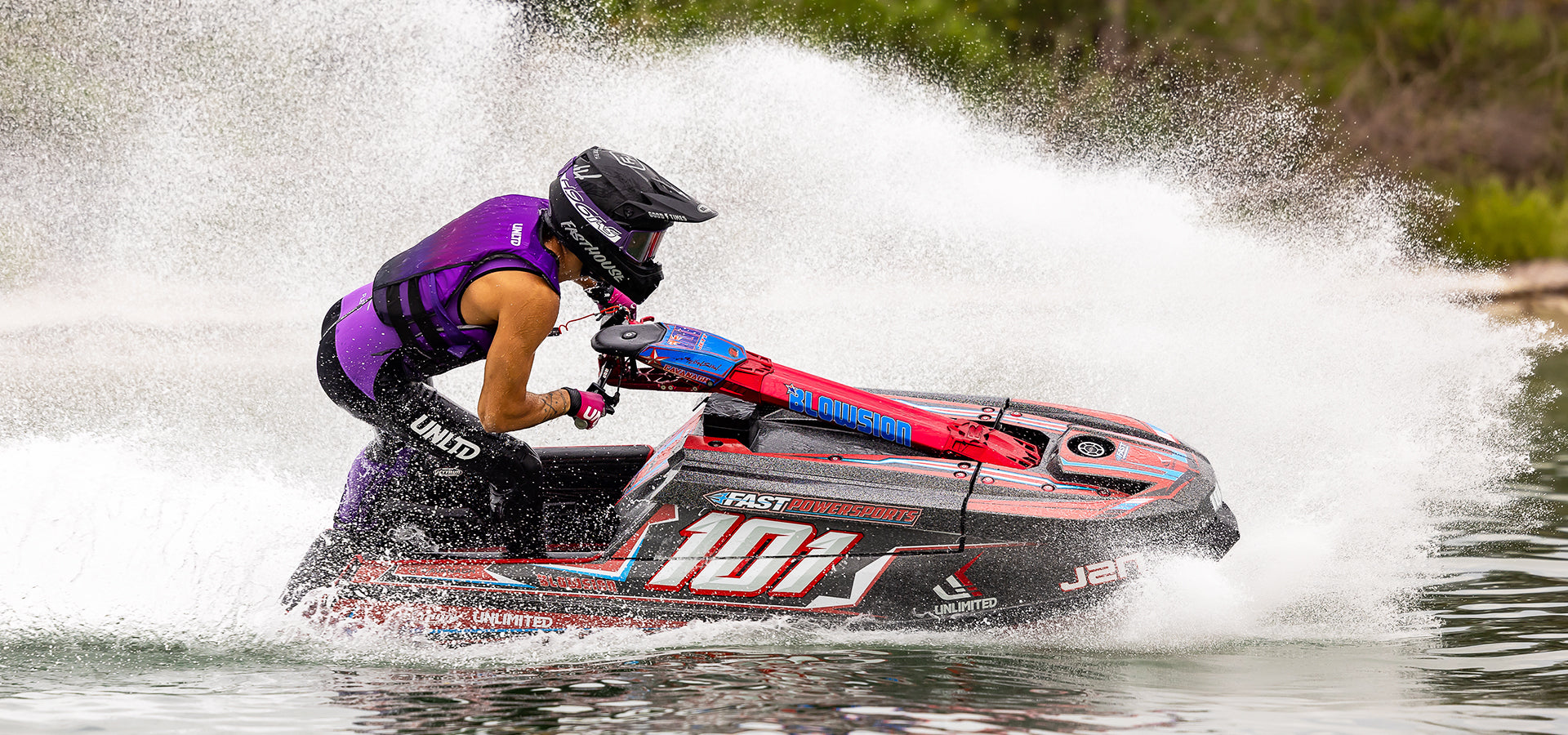
Aggressive riding and racing: Low-profile, competition-cut vests with segmented foam panels give you full range of motion while keeping the vest locked in place through hard turns and impacts. Critical for riders pushing a Kawasaki SX-R or Sea-Doo RXP-X at speed.
Freestyle and freeride: Prioritize shoulder mobility above everything. A vest that fights your arm movement becomes a real problem when you're inverted or working through a trick sequence.
Key Features Worth Paying For
- Segmented or articulated foam: Flexes with your body instead of restricting movement
- Neoprene panels: Better fit retention and comfort for high-movement riding
- Drainage ports: Allows water to exit after submersion — faster drying, less drag during re-entry
- Reflective trim: Low visibility conditions happen; reflective panels help rescue teams find you faster
- Impact protection: Some vests include spine or chest padding — valuable for aggressive riding styles
Don't Cheap Out Here
A budget life vest might check the certification box, but fit, foam quality, stitching durability, and buckle reliability all degrade faster in cheaper construction. This is the gear that has to perform perfectly the one time everything goes wrong.
At UNLIMITED PWC, we apply the same standard to every piece of safety gear we carry that we apply to performance parts: it has to be something we'd trust on our own riders. Designed with the precision that Japanese watercraft culture demands and built for riders worldwide — from the competitive racing scene to open-ocean touring — our PFD selection is built around function first.
Ride with confidence. Ride protected. Choose a vest that earns its place on every session, every time.
UNLIMITED PWC — Born on the Water. Built for the World.